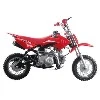
Hey there, fellow dirt bike lovers and random people who ended up on my page! If you’re like me, you’ve probably stared at your trusty 125cc enduro dirt bike more than once and thought, “Man, this thing rips on trails, but why can’t I just cruise to the gas station or meet my friend at the coffee shop without loading it into a truck every time?” I get it—converting a dirt bike to street legal sounds like a wild ride (pun totally intended), especially if you’re not a mechanic, and even if you are. As someone who runs a shop that sells these bad boys, including the 125cc Enduro Dirt Bike that everyone’s been hyping lately, I’ve had so many customers ask me this exact question. So today, let’s cut through the hype and the jargon, and answer: Can I actually convert my 125cc enduro to street legal? Spoiler: It’s not impossible, but it’s not as easy as slapping a headlight on and calling it a day. Let’s break this down like we’re talking over a cold beer after a long trail ride.
First off, let’s talk about what makes a dirt bike a dirt bike, and what it needs to be street legal. Dirt bikes are built for off-road—they don’t have mirrors, turn signals, horns, license plates, or even functional headlights that meet road standards. Their exhaust is often super loud (legal in the woods, not so much on Main Street), their tires are knobby for traction in mud and dirt (bad for wet pavement), and their frames aren’t always built to handle the extra weight of street-required parts. But here’s the thing: it’s not a “one size fits all” situation. Some areas have way stricter laws than others. Like, if you live in California, you’re gonna have to jump through way more hoops than someone in a smaller town in the Midwest where the local DMV barely looks at dirt bikes. That’s the first big thing to check: your local, state, or country’s street legal requirements. Don’t start buying parts before you know what you actually need—trust me, I’ve seen a guy drop $300 on parts only to find out his county requires a VIN (which most stock enduro dirt bikes don’t have) that he can’t get.
Now, let’s get into the actual parts you’ll need. This is where it gets real. Let’s start with the basics that every street legal bike needs: lighting. Stock enduro bikes have tiny, dim headlights for night trail riding—they’re not going to cut it for roads. You need a headlight that’s DOT-approved, meaning it meets federal (or your country’s) standards for brightness and beam pattern so you don’t blind oncoming drivers. Then there are turn signals—front and rear, both left and right. I’ve seen people try to jury-rig ones from old cars, but the right ones are specifically made for motorcycles, and they have to be positioned at certain heights. Mirrors too—usually two, but some places only require one. A horn is non-negotiable, too; it has to be loud enough for other drivers to hear, not just a quiet little beep like a toy.
Next up, exhaust. Most stock enduro exhausts are straight pipes or have pretty minimal muffling, which makes them way too loud for street use. The EPA (or your environmental agency) has noise limits for street vehicles, so you’ll need a quiet, legal exhaust. And not just quiet—some areas require that the exhaust is certified, so a random aftermarket pipe from Amazon might not pass inspection. I always tell my customers to do their research on this part because a lot of them skip it and end up failing their state’s inspection.
Then there’s the stuff people overlook. License plate mounts and lights—you need a specific mount that’s visible, and a light that illuminates the plate so cops can read it at night. Tires and wheels: knobby dirt bike tires are great for trails, but they’re slippery on wet roads and don’t have the traction you need for turns on pavement. You’ll need street-legal tires with a smoother tread pattern, and sometimes different wheels too, depending on the bike. Oh, and brakes! Dirt bike brakes are built for stopping on loose dirt, not hard pavement. You might need to upgrade the front and rear brakes to get enough stopping power for street speeds. Suspension? Maybe not, but some people adjust their suspension for street use since the weight is different with all the new parts.
Wait, let’s not forget about paperwork. This is probably the most frustrating part for most people. A lot of 125cc enduro dirt bikes sold as “off-road only” don’t have a VIN that’s registered for street use. So you might have to go through a process to get a title for it, or buy a bike that was originally sold as a street bike and modify that (but where’s the fun in that?). In some cases, you might have to get a special inspection from a mechanic to prove that the bike meets all safety standards, and then apply for a “title transfer for custom vehicles” or something similar. I had a customer last year who bought a used enduro, spent $1,500 on parts, and then found out his state didn’t offer titles for converted dirt bikes—so he basically had a fancy off-road bike that he couldn’t ride on streets. Ouch. That’s why checking your local laws first is non-negotiable.
Now, let’s talk about the cost. I know this is a big one. If you’re converting a 125cc enduro, how much is this gonna set you back? Let’s break it down roughly. The basic parts (headlight, turn signals, mirror, horn, license plate setup) are gonna be around $200-$300. Then a legal exhaust is another $150-$250. Tires and wheels—if you need them—could be $300-$500. Brakes might add another $100-$200. Then there’s the inspection fee, title fees, registration—another $100-$200. All in, that’s anywhere from $1,000 to $2,000. And that’s if you do most of the work yourself. If you take it to a mechanic, you’re adding labor costs—another $500-$1,000, easy. Is it worth it? Well, if you’re tired of hauling your bike everywhere, that’s a personal call. But for a 125cc bike, which is already pretty affordable, that’s a pretty big investment.
Wait, but here’s a question I get a lot: Is a 125cc even powerful enough for street use? Let’s be real—125cc bikes are small. They’re great for trails, for new riders, for zipping around neighborhoods. But on busy highways, you might struggle to keep up with traffic. Most street legal laws don’t have a specific engine size limit for 125cc, but you do have to be able to safely merge onto roads and maintain speed. So if you’re planning on only riding on back roads and side streets, a 125cc is perfect. If you want to ride on interstates, you might need a bigger bike. Just something to keep in mind.
Let me also mention that there are alternatives to converting. If you’re set on having a 125cc bike that’s street legal, why not just buy one that’s already built for that? Like the 125cc 140cc Pit Bike For Adult or the 125cc Jump Dirt Bike? Wait, no—actually, our Four Stroke Pit Bike Cross Dirt Bike 125cc has options that make it way easier to get street legal, because it’s already built with parts that are closer to street standards. Or even our Pit Bike Gasoline 125cc series—some of those come with pre-installed lighting harnesses, which cuts down on your conversion work. A lot of people don’t realize that buying a bike that’s semi-street ready from the start saves them so much time and hassle, compared to converting a pure enduro.
Now, let’s talk about the do’s and don’ts, because I’ve seen both go right and go wrong. Do check your local DMV or transportation department website first—they’ll have all the exact requirements for your area. Don’t assume that parts from any bike will work; dirt bike parts are not the same as street bike parts. Do get DOT-approved parts—skipping this will just lead to headaches later. Don’t skip the paperwork, even if it seems like a pain. Nothing is worse than getting a $500 ticket for riding an unregistered street bike. Do take your time with the wiring—bad wiring can lead to fires or dead batteries, which is super annoying on a ride. Don’t try to cut corners on safety; your brakes and lights are what keep you alive on the street.
Wait, also, what about insurance? If you’re riding a street legal bike, you need insurance, just like a car. That’s another cost you might not have considered for off-road use. Off-road bikes don’t require insurance, but street ones do—so add another $100-$300 a year for that, depending on where you live and your driving record.
Let me wrap this up by saying: Yes, you can convert a 125cc enduro dirt bike to street legal, but it’s not a simple project. It requires research, money, time, and sometimes a little bit of luck with local laws. If you’re a handy person who likes working on bikes, you might have fun with this project—there’s something cool about turning a trail-only toy into a bike you can use every day. But if you’re not mechanically inclined, or you don’t want to deal with the paperwork, it might be better to look at pre-built street-legal 125cc options instead of converting. Like, seriously, our 125cc Enduro Dirt Bike is amazing for trails, and if you’re set on having a street bike, checking out our other models is a no-brainer.
If you’re still on the fence about converting, or you want to talk about the best way to go about it, hit us up. We’re always here to help fellow riders figure out what works for their needs. Don’t waste time and money on a conversion that doesn’t fit your area’s rules—reach out, and we can point you in the right direction, whether that’s modifying your existing enduro or picking out a bike that’s already built for street use.


Before I go, here are a few quick references for anyone who wants to dive deeper into the legal stuff and conversion parts:
- National Highway Traffic Safety Administration (NHTSA) guidelines for motorcycle equipment requirements
- State-level off-road vehicle to street vehicle conversion regulations (varies by location)
- Motorcycle mechanics’ guides for wiring and brake upgrades for dirt bike conversions