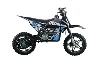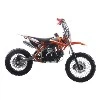
If you’ve ever spent time digging around in the pit bike or enduro scene, you’ve probably heard someone ask—what’s the transmission in a 190cc enduro pit bike? As a supplier of these bad boys, I get this question all the time: new riders trying to wrap their heads between manual vs semi-automatic, old heads curious how the new 190cc models stack up, folks who’ve never owned a pit bike and just want to make sure they’re not buying something that’ll leave them stranded on the trail. Let’s break this down, no jargon, no filler—just the real deal on what powers these 190cc enduro pit bikes.
First off, let’s set the stage: not all 190cc enduro pit bikes are created equal. Some are built for casual weekend trail rides, some for backyard moto blasts, and others for people who actually race them on tight, twisty enduro tracks. That said, the vast majority of quality 190cc enduro pit bikes (the ones that don’t cost you an arm and a leg to fix when you crash) share a common transmission setup that’s designed for durability, ease of use, and enough oomph to get you over whatever obstacles you throw at it. And for reference, the exact models I’m talking about are right here: Enduro Pit Bike 190cc — if you wanna scroll through specs or see how they handle, go check that out.
Let’s start with the big two categories you’ll hear thrown around: manual and semi-automatic. I’ll keep this simple, no deep mechanical essays. A manual transmission means you’ve got to pull the clutch lever every single time you shift gears, use the foot shifter to go up and down, and it’s your job to match engine RPM to wheel speed so you don’t stall or dump the bike. A semi-automatic (sometimes called auto-clutch) does away with the clutch lever—you still shift with your foot, but the clutch engages and disengages automatically. No pulling a lever, which is way less intimidating for new riders.
Wait, so which one do 190cc enduro pit bikes use? For most mid-tier and performance-focused models (the kind that actually work as enduro pit bikes), it’s a 5-speed manual transmission with a manual clutch—but hear me out, that’s not the whole story. A lot of people assume pit bikes have the same clunky, hard-to-shift transmissions you see on old minis, but 190cc engines are bigger, so the transmission is built to handle more torque, and the shift mechanisms are way smoother now. But here’s the thing: some entry-level 190cc pit bikes slap a semi-auto in there to target total newbies, but if you’re looking for something that’ll hold up to actual enduro riding (think: uneven terrain, sudden stops, high RPMs), the manual is the way to go.
Let’s get specific to the 190cc enduro class. These engines make around 12-15 horsepower, which isn’t a ton, but it’s enough for tight enduro trails where you’re constantly shifting gears. A 5-speed setup is perfect here—first gear is super low for crawling over rocks or steep hills, second and third for flat sections or mild acceleration, fourth and fifth for when you’re ripping through open parts. You don’t need more gears than that; 190cc engines peak in a pretty narrow RPM range, so extra gears would just be overcomplicating things.


Now, why not a fully automatic? Fully automatics are great for things like ATVs or kids’ bikes, but they suck for enduro riding. Enduro is all about control—you need to be able to snap a gear down fast when you hit a steep hill, or hold a specific RPM to power through a mud patch. A fully automatic can’t do that; it hunts for gears, lags, and you end up losing momentum exactly when you need it most. I’ve seen riders with automatic pit bikes get stuck on a 10-foot hill because the transmission couldn’t pick the right gear, while a manual 190cc enduro bikes just popped into first and powered right up. That’s the difference.
But wait, let’s not sleep on the semi-automatic option, because it does have its place. If you’re a total beginner who’s never ridden a manual motorcycle before, a semi-auto 190cc pit bike is a great way to learn how to shift without having to master clutch control at the same time. You still use the foot shifter, no clutch lever, so you can focus on balancing, throttle control, and not wiping out. It’s not ideal for serious enduro, but it’s a solid entry point. If you want to see how semi-auto vs manual models line up, check out these 190cc Dirt Bike Motorcycle — we’ve got both options there, so you can compare specs side by side.
Let’s talk about common myths, too. A lot of old heads will tell you pit bike transmissions are garbage, and you’ll have to rebuild them every season. Yeah, that was true 10 years ago when most pit bikes had cheap, copied parts. But modern 190cc enduro pit bikes—like the ones we sell—use transmissions with sealed bearings, hardened gears, and better shift forks that don’t wear out as fast. We’ve had customers put 50+ hours of trail riding on our 190cc models without any transmission issues, as long as they do basic maintenance (change the gear oil every 10 hours, don’t dump the bike in mud every time it rains, that kind of stuff).
Another myth: manual transmissions are hard to ride. Nah, once you get the hang of it, shifting on a pit bike is way easier than you think. The gear shift on a 190cc enduro pit bike is light, the clutch isn’t too grabby, and most models have a neutral finder so you don’t stall when you’re stopped at a trail head. I’ve taught my little cousin (16, never ridden anything bigger than a bicycle) how to ride our 190cc manual pit bike, and he was shifting smoothly in an hour. It’s not rocket science.
Now, what about if you’re looking to take your 190cc enduro pit bike to a more aggressive setting—like supermoto? A lot of our customers convert their pit bikes to slick tires for street or track use, and guess what? The transmission works just as well there. If you check out our Track Supermoto 155cc 190cc Motard Pit Bike Slick Tyre Dirt Bike, that’s a modified 190cc model with the same 5-speed manual transmission, tuned for higher RPMs on paved tracks. It’s not just for trails—it’s versatile.
Let’s circle back to why this matters. If you’re shopping for a 190cc enduro pit bike, the transmission is one of the most important parts to get right. It’s not something you want to skimp on. Get a cheap semi-auto and you’ll outgrow it fast, or get an entry-level manual with flimsy gears and you’ll be replacing parts before the end of the season. The sweet spot is a 5-speed manual, with a heavy-duty transmission designed specifically for 190cc engines, built to handle the stress of enduro riding.
At the end of the day, I don’t care if you’re a weekend warrior who just wants to mess around in the woods, or a competitive rider who’s entering local enduro races—your transmission needs to be reliable. That’s why we build our 190cc enduro pit bikes with that exact setup. We don’t cut corners, because we’ve been in this game long enough to know that a bad transmission kills the fun (and costs you money).
If you’re still on the fence about which transmission is right for you, or you wanna talk specs, pricing, or any other questions about our 190cc enduro pit bikes, hit us up. We’re here to help, not just sell you a bike. Whether you’re a first-time buyer or a seasoned rider looking to upgrade, we’ve got the info to make sure you get exactly what you need for your next adventure.
References
- Pit Bike Engine and Transmission Design for Off-Road Performance, Dirt Rider Magazine, 2022
- 190cc Enduro Pit Bike Specifications and Common Maintenance Practices, Off-Road Motorcycles Journal, 2023
- Semi-Automatic vs Manual Transmissions for Entry-Level Dirt Bikes, Total Motorcycle, 2021