Hey fellow parents, scooter lovers, and anyone shopping around for a kids’ electric scooter—let’s cut to the chase: picking the right motor size isn’t just about how fast your kid can zoom around the driveway. It’s about safety, durability, and making sure the scooter grows with their skills, right? As someone who’s been in the kids’ electric scooter game for a minute now, I’ve heard way too many horror stories of a motor that’s too weak (your kid huffing to get up a tiny curb) or way too strong (a tiny rider struggling to control a scooter that feels like a race car). So let’s break this down, no fancy jargon, just real talk from someone who’s sold these things to families for years.
First off, let’s get what motor size actually means here—we’re talking watts, people. That’s the unit that measures how much power the motor puts out. You’ll see numbers like 150W, 250W, even 500W, and it’s easy to just grab the biggest one thinking “more power = better.” But that’s not the case. It all depends on three big things: your kid’s age and size, where they’ll be riding, and how much they’re actually going to use the scooter. Let’s start with the basics for younger kids, like ages 4 to 7, who are just getting the hang of balancing anything with wheels.
For little ones, a 150W motor is pretty much perfect. Why? It’s slow (top speed around 8-10 mph), which is exactly what you want when they’re still learning to stop and steer without crashing. You don’t need a motor that can push them up a big hill or zoom all over the neighborhood. A 150W model is lightweight, too—so if they tip it over (which they will), they can pick it up themselves. That’s why a lot of parents come to us looking for a Portable Kids Electric Scooter for these tiny riders—something easy to carry to the park, not too heavy, and with just enough power to keep up with a walking pace. Trust me, I’ve seen a 6-year-old try to handle a 500W scooter and they couldn’t slow it down fast enough; it’s not pretty.
Now, when kids get a little older, say 8 to 12, their size and coordination have improved, so you can step up the motor. A 250W motor is the sweet spot here. Top speed hits around 12-15 mph, which is fast enough for them to have fun zooming around their block or a smooth sidewalk, but not so fast that they lose control. The 250W is strong enough to handle small hills—like that gentle incline by the playground—without your kid having to push with their feet the whole time. We sell a ton of Electric Kick Scooter for Kids in this range, and the feedback is always the same: it’s the right mix of fun and manageable. One mom told me her 10-year-old can now ride to the bus stop without her having to carry the scooter, which was a game-changer.
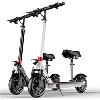
But wait, what about pre-teens and teenagers? Ages 13 and up? They’re bigger, stronger, and probably want to ride a little farther and a little faster. Here, a 300W to 500W motor makes sense. Top speeds go from 15 mph up to 18 mph, and the extra power lets them handle bigger hills, longer rides, and even light pavement paths without breaking a sweat. A 500W motor is also great if your teen wants to carry stuff, or if they’re riding in areas that aren’t perfectly smooth—like a slightly bumpy neighborhood street. That’s also why we have the Foldable Electric Scooter for Teenagers, because older kids often want something they can fold up and bring to a friend’s house or on a bus trip, and a 300-500W motor fits that need perfectly.
Now, let’s talk about the stuff that affects motor size beyond age and size. Where will they be riding? If it’s just flat sidewalks and driveways, you don’t need a huge motor. But if your kid lives in a hilly area, or they’re riding on uneven terrain (like a park trail with small bumps), go a little bigger. A 250W motor on a flat surface is great, but if they’re trying to get up a steep driveway in the suburbs, they might struggle. That’s where a 300W makes sense. Also, think about how often they’ll ride: if it’s just a weekend thing, a smaller motor is fine, but if it’s their main way to get around the neighborhood (like to a friend’s house or the corner store), a stronger motor will hold up better.
I’ve seen a lot of parents make the mistake of buying a motor that’s too big because they think it’ll last longer. But here’s the thing: if a 10-year-old is riding a 500W scooter, they’re way more likely to get into a situation where they can’t control it. We had a dad who bought his 9-year-old a 500W scooter because he wanted to “save money and get something that would grow with them,” and three weeks later they brought it back because their kid had crashed it into a fire hydrant. It’s not that the scooter was bad, it was just too much for their kid’s skill level.
Another thing to consider is battery life—wait, no, not battery life, but how the motor works with the battery. A bigger motor needs a bigger battery, which makes the scooter heavier. For little kids, extra weight means they can’t lift it, they might trip over it, or it’s harder to steer. For older kids, it’s less of an issue, but still something to think about. Our Best Electric Scooter for Kids is the one where the motor size matches the age group, not the other way around. That’s why we test every scooter we sell with kids of different sizes to make sure the motor is just right.
Let’s also talk about safety features that go hand-in-hand with motor size. A scooter with a smaller motor usually has a simpler braking system, which is easier for kids to learn. Bigger motors (300W+) often have better brakes—like hand brakes instead of foot brakes—because the scooter is faster, so you need more stopping power. That’s something to keep in mind: when you step up the motor, make sure the braking system keeps up. We include that in all our products, but it’s good to check when you’re shopping elsewhere.
Wait, what if your kid is in between ages? Like, they’re 7 but really tall and coordinated, or 10 but still a little nervous? Go with the slightly smaller motor. It’s better to have a scooter that’s a little underpowered (in a good way) than one that’s too powerful. We have customers who swap out motors sometimes when their kid outgrows a smaller one, and that’s totally normal. It’s all about matching the motor to their current skills, not what they might be able to do in a year.
I get it, you want your kid to have a scooter they’ll love, and you don’t want to buy something they’ll outgrow in a month. But the motor size is the core of how the scooter works. If you get that right, the scooter will last longer because they’ll use it more, and it’ll be safer. We’ve been selling kids’ electric scooters for years, and the number one question we get is “what size motor do I need?” That’s why we’ve made sure all our models are categorized by motor size, with clear guides on which is best for which age.
So to recap: for ages 4-7, 150W max—slow, lightweight, easy to handle. For ages 8-12, 250W—perfect balance of fun and control. For ages 13+, 300-500W—enough power for hills and longer rides. Don’t overdo it on the motor size, and always think about where and how they’ll ride.
If you’re still not sure which one is right for your kid, we’re here to help. Just reach out to our team—we’ve got experts who can walk you through the specs, answer your questions, and make sure you get exactly what fits your family. Whether you’re looking for that portable model for your little one, a reliable kick scooter for your 10-year-old, or a foldable one for your teen, we’ve got you covered.
At the end of the day, a kids’ electric scooter should be about joy, not stress. The right motor size makes all the difference—your kid will have fun, you’ll feel good about their safety, and everyone wins. So skip the guesswork, go with what works for your kid’s age, size, and riding style, and enjoy watching them zoom around.
References:


- Consumer Product Safety Commission. (2022). "Safety Guidelines for Recreational Electric Scooters for Children."
- Electric Vehicle Association. (2021). "Motor Power and Performance for Small Electric Vehicles."
- Kids’ Ride Safety Foundation. (2023). "Age-Appropriate Equipment for Children’s Wheel Sports."
- Scooter Industry Association. (2022). "2022 Market Report: Kids’ Electric Scooter Specs and User Needs."