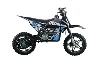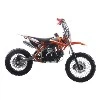
If you’ve ever shopped for a kids’ pit bike—especially a 50cc model—you know how overwhelming it can be to sort through all the small details that make a big difference for safety, performance, and long-term care. As someone who’s spent years working with families to pick the right two-wheeler for new riders, one of the most common questions I get isn’t about tire size or safety gear—it’s about what kind of gas a 50cc pit bike for kids actually uses. A lot of first-time parents (and even some grandparents) assume all small engine bikes run on the same fuel, but that’s a mistake that can lead to poor performance, engine damage, or even safety hazards for young riders. Let’s break this down simply, with the science behind it, so you can keep your kid’s ride running smooth and safe.
First, let’s start with the basics: nearly all 50cc pit bikes designed for kids today are four-stroke engines. That’s not just a random number—two-stroke engines were more common in older, lower-cost models from the early 2000s, but modern safety and emissions rules have pushed most kid-sized bikes to four-stroke technology. For anyone who doesn’t know the difference, a four-stroke engine uses four separate piston movements (intake, compression, combustion, exhaust) to complete one power cycle, while a two-stroke completes a cycle in two movements. That means four-stroke engines are cleaner, quieter, and for beginners, much easier to maintain—no mixing gas and oil manually, which is a huge plus for new riders or parents who don’t want to fuss with extra steps. If you’re shopping for a reliable, beginner-friendly option, our 50cc Pit Bike for Kids line is built exclusively with four-stroke engines for exactly that reason.
Now, back to the gas question. For most four-stroke 50cc kids’ pit bikes, the fuel requirement is regular unleaded gasoline with an octane rating of 87 or higher. That’s the same gas you put in most passenger cars, which is convenient for families—you don’t have to make a special trip to a small-town gas station or order fuel online just for the pit bike. But here’s where people get confused: I’ve had customers show up at our shop with a can of racing gas or ethanol-free premium fuel, thinking it’s better for their kid’s engine, and that’s not the case. 50cc engines are small (they displace just 50 cubic centimeters of volume, about the size of a large soda can) and tuned for low-to-mid range power, which is perfect for kids learning to ride. Higher octane fuels are designed for high-compression engines, like those in racing motorcycles or performance cars, which operate at much higher temperatures and pressures. Using too high an octane fuel in a small, low-compression 50cc engine is a waste of money and won’t improve performance—it might even cause the engine to run a little rougher, since the fuel isn’t designed to ignate properly in that setup.
What about ethanol? Most gas sold in the U.S. and many other countries has up to 10% ethanol (E10) by volume. Is that safe for a 50cc pit bike? For the most part, yes—modern fuel systems and materials are designed to handle E10, so occasional use won’t cause damage. There is a caveat, though: ethanol absorbs water over time, which can cause issues if your pit bike sits unused for long periods (like over winter). If you store your bike for more than a month or two, it’s a good idea to either use a fuel stabilizer or drain the gas tank to prevent water buildup. That’s a tip I always share with new families, because it’s one of the most common causes of starting problems in small pit bikes, not the type of gas itself.
Now, let’s address the rare case where a 50cc pit bike might be two-stroke. While they’re less common these days, there are still a handful of budget or older models out there, and some custom builds. If you have a two-stroke 50cc, the gas requirement is different: you can’t use regular unleaded straight. Two-stroke engines don’t have a separate oil reservoir like four-strokes, so they burn oil mixed with gas to lubricate the moving parts. For these, you’ll need to use a pre-mixed gas and two-stroke oil, usually at a ratio of 32:1 or 40:1 (check your bike’s owner manual for the exact ratio). The bad news is, if you own a two-stroke 50cc pit bike, you have to be extra careful with the mix—too much oil will foul the spark plug and cause smoking, too little will seize the engine, which is a costly repair for a small bike. That’s another reason we don’t carry two-stroke 50cc models in our line: we want to eliminate as many maintenance hurdles as possible for young riders and their parents.
To give you context on how our engines are built, let’s look at a few of our most popular models. Our Four Stroke Dirt Bike 50cc is our flagship entry-level model, designed specifically for kids aged 6 to 12. It uses a simple, air-cooled four-stroke engine that runs on regular 87 octane gas, no mixing required. We tested this engine extensively with different fuel types before putting it on the market, and 87 octane is the sweet spot—it delivers consistent power, is easy on the engine, and keeps operating costs low for families who are just starting out. For riders who are a little older or more experienced, we also carry a range of larger models, like the 110cc Automatic Pit Dirt Bike, which is perfect for teens moving up from a 50cc, or the Four Stroke 125cc Dirt Bike 110cc Air Cooled Pit Bike for more advanced riders.
Another common question I get is, “Can I use different types of gas if I can’t find 87?” The short answer is, it’s not ideal, but most 50cc four-stroke engines will run on 85 octane if you live in a high-altitude area (above 8,000 feet), since octane ratings are adjusted for elevation. But below that, 85 octane can cause pre-ignition (or “knocking”) in small engines, which over time can wear down piston rings and bearings. If you’re traveling and only have access to 85 octane, use it for a short trip, but fill up with 87 as soon as you can to avoid long-term damage.
Pro tip for new owners: always check your owner’s manual before filling up. Every engine is a little different, even if it’s the same 50cc size. Some older models might specify a higher octane, or require ethanol-free gas, but that’s rare these days. For our 50cc Pit Bike for Kids, the manual clearly states regular unleaded 87 octane, no mixing, no special fuel required. That’s part of the design philosophy: we make bikes that are easy for families to use, not just for experienced mechanics.
Now, let’s talk about why this matters for kids specifically, beyond just engine performance. A 50cc pit bike is meant for learning, so consistent, reliable power is key. If the engine is running poorly because you used the wrong gas, it can stall unexpectedly mid-ride, which is a safety risk for a young rider who’s still building their skills. It can also make the bike harder to handle, leading to falls or loss of control. Taking the time to use the right fuel is a small step that goes a long way in keeping your kid safe on the track or trail.
I’ve seen too many new families make the mistake of overcomplicating this. They’ll go to the gas station and grab the most expensive premium fuel because they think it’s better, or they’ll buy a two-stroke model without realizing they have to mix oil and gas, and then get frustrated when the bike doesn’t work right. Our goal as a supplier is to cut through that confusion. All of our models, from the entry-level 50cc Pit Bike for Kids up to the 110cc Dirt Bike Motorcycle, are designed with beginner-friendly maintenance in mind, including simple fuel requirements.
Let’s recap to make sure this is clear for anyone who’s still unsure:


- Almost all modern 50cc pit bikes for kids are four-stroke engines, which run on regular unleaded gasoline with 87 octane.
- Two-stroke 50cc models are rare, require pre-mixed gas and oil, and are not recommended for most new riders due to the extra maintenance.
- Ethanol-blended gas (E10) is safe for most models, just use a stabilizer if storing long-term.
- Never use racing gas or higher octane than 87, as it won’t improve performance and can waste money.
If you’re in the market for a 50cc pit bike for your kid, or you have questions about fuel requirements for any of our models, we’re here to help. We work with families across the globe to find the right size, style, and engine for their young rider, and we can walk you through every step, from choosing the right bike to basic maintenance tips like fuel choice. Don’t hesitate to reach out to our team to discuss your needs, get more details on our 50cc Pit Bike for Kids line, or learn more about any of our other models like the Four Stroke Dirt Bike 50cc or 110cc Automatic Pit Dirt Bike. We’re here to make sure your family’s pit bike experience is safe, fun, and hassle-free.
References
- Motorcycle Industry Council. (2022). Small Engine Fuel Requirements for Off-Highway Motorcycles. Retrieved from mic.org/off-highway-resources
- American Petroleum Institute. (2021). Octane Ratings and Small Engine Performance. Retrieved from api.org/energy-basics/fuels/octane
- Pit Bike Safety Association. (2023). Maintenance Guidelines for Youth Off-Highway Vehicles. Retrieved from pitbikesafety.org/youth-vehicle-care
- EPA. (2022). Emission Standards for Small Off-Road Engines. Retrieved from epa.gov/regulations-emissions-vehicles-and-engines/small-off-road-engines